If you’re on the fallacious facet of your 30s, you’ll in all probability bear in mind an age of anime localizations when cigarettes became lollipops and onigiri turned jelly donuts. Anime’s early forays into the Western world had been usually on the wild facet. Official subs had been uncommon or nonexistent till the late ‘90s (dubbing and translation had been usually works of ardour, with loads of creative freedom utilized). We frequently have a tendency to take a look at these cultural artifacts by means of nostalgia-tinted glasses. The Dragon Ball fandom, for instance, is break up between those that recognize the unique Funimation dub and those that name out egregiously nonsensical traces.
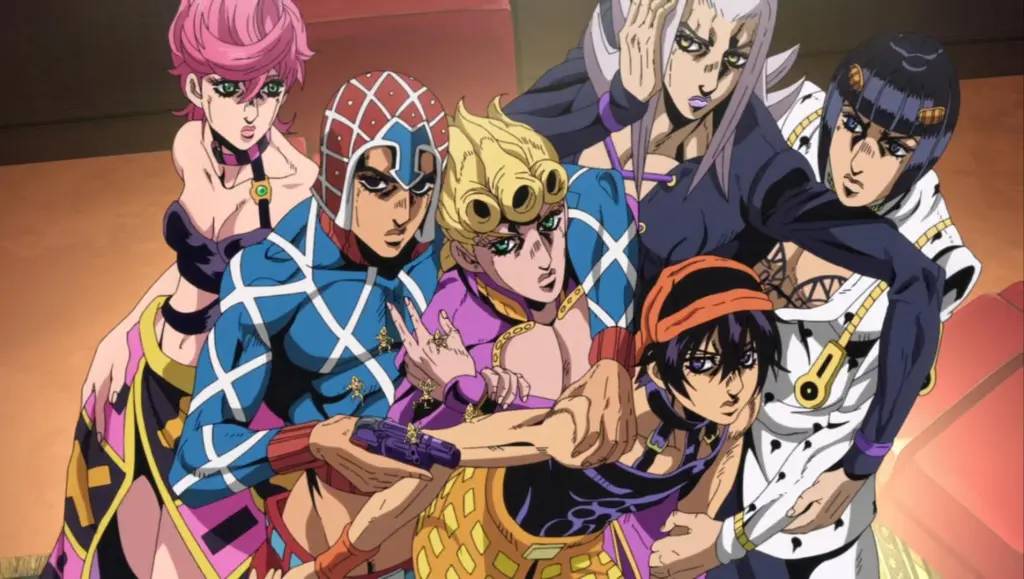
With anime changing into such a outstanding and worthwhile type of leisure, these early experiments (and generally, disasters) appeared a factor of the previous, or not less than that’s what I believed till I noticed Netflix’s latest Italian dub of JoJo’s Weird Journey: Golden Wind going viral on social media. The voice performing forged, working below director Mosè Singh, determined to essentially go all in on the “weird” half, creating one thing that’s equally hilarious and bamboozling.
As followers of JoJo’s Weird Journey know, Golden Wind is about in Italy, a rustic that the manga’s creator, Hiroiko Araki, has lengthy been enamored with. The protagonists are all Italian, with lots of them hailing from Naples. So as to add extra realism to the dub (I believe?), the employees determined to insert Neapolitan dialect within the dialogues. As somebody born a couple of miles south of Naples, I virtually spilled my milk after I heard Abbacchio name Giorno “facc e cazz” (actually “dickface”), or Giorno describe the piranha fish he creates together with his Stand energy as “nu bellu pesc” (“an exquisite fish,” which is slang for “penis”).

For sure, there’s no hint of this in Araki’s work. Irrespective of how a lot he loves Italian trend and artwork, Golden Wind’s characters nonetheless communicate common Japanese with the odd insertion of an Italian phrase for taste (they usually don’t make dick jokes). However language variations are usually not the one issues added on this new dub. Fully new traces of dialogue have been added, together with references to Italian memes and web tradition, in an try and make the collection really feel as “Italian” as doable. Bucciarati’s gang went from being a bunch of lovable weirdos with a peculiar sense of trend and a penchant for violence to speaking like the common Italian Gen-Z. The dub additionally provides a whole lot of profanity that’s nowhere to be discovered within the unique, however is usually related to using regional dialects in Italy.
What surprises me probably the most, nonetheless, is that followers are literally loving it. If somebody got here out at present with the equal of the notorious Ghost Tales English dub for a well-liked collection resembling JoJo, I’d count on to see riots within the streets. As a substitute, Italian followers largely love this dub. Digital creators are sharing scenes on social media, and the feedback are overwhelmingly optimistic. The reason being that the dub is objectively humorous, and it fits the collection surprisingly properly.
Whereas JoJo might have emotional moments and high-stakes storylines, the collection additionally by no means takes itself too severely. It’s no coincidence that, because the anime’s debut, JoJo has generated numerous memes. Araki’s model of delicate humor has been evident because the starting in Joseph Joestar’s “Oh my god!” expression, Jotaro’s absurd flexes, Josuke’s hair-induced rage, and extra. Half 5 of the saga, Golden Wind, takes this one step additional. (Simply have a look at the viral torture dance sequence for proof.) So including a bunch of bizarre traces and sudden bursts of Neapolitan dialect doesn’t really feel that misplaced.

Nonetheless, each type of translation generates a debate between faithfulness to the unique and freedom of interpretation. I can get pleasure from this bizarre dub as a result of I’ve learn the manga and watched the anime in Japanese with subtitles, but when this had been my first method with the collection, how a lot would my notion of Araki’s work be influenced, and even distorted, by the liberties taken by the dubbing group? Think about if we by no means acquired a Dragon Ball Kai dub, and the one English model of the scene the place Frieza impales Krillin is the one the place he yells, “Yeehaw trip ’em cowboy!”
I’m not equating Golden Wind’s dub with these early anime localization disasters. This work was finished by artists who know and love the supply materials and determined to not merely translate it, however create one thing distinctive. You’ll be able to like or dislike the end result, however the intent is obvious. Personally, I’m extra irked by the selection of not utilizing Neapolitan voice actors. The voice of Giorno comes from Matteo Garofalo, who’s from Sardinia, whereas Bucciarati is voiced by Andrea Oldani, who was born a couple of miles exterior of Milan. This leads to a stumped use of Neapolitan, which makes the dub even funnier, maybe, but additionally raises questions of authenticity and cultural respect.
Garofalo ineffectively answered these critiques in a TikTok video, the place he factors out that the bizarre pronunciation of The World, Dio Brando’s Stand in Stardust Crusaders, by Japanese voice actor Takehito Koyasu, turned iconic as “Za Worudo.” I don’t assume this argument is especially related to the critiques which have been moved to the brand new dub. Furthermore, the extreme use of swear phrases — not current within the Japanese model — additionally appears culturally problematic, because it paints an image of Southern Italians as crude and unrefined that leans into widespread stereotypes. Certain, Bucciarati and his gang are a bunch of criminals, however contemplating how fancy they gown, they’ll’t be that uncultured.
I don’t assume that taking creative liberties with a dub is essentially fallacious. I’m having fun with the Italian model of Golden Wind and I burst out laughing each time I hear a type of bizarre traces. It’s a superb excuse to rewatch the collection, too, and it jogs my memory of an easier time when anime and their followers didn’t take themselves too severely. However I’d by no means put it above the unique model. It’s a humorous variation and nothing extra. I simply hope that, subsequent time, they’ll use actors who really communicate the language they’re portraying.